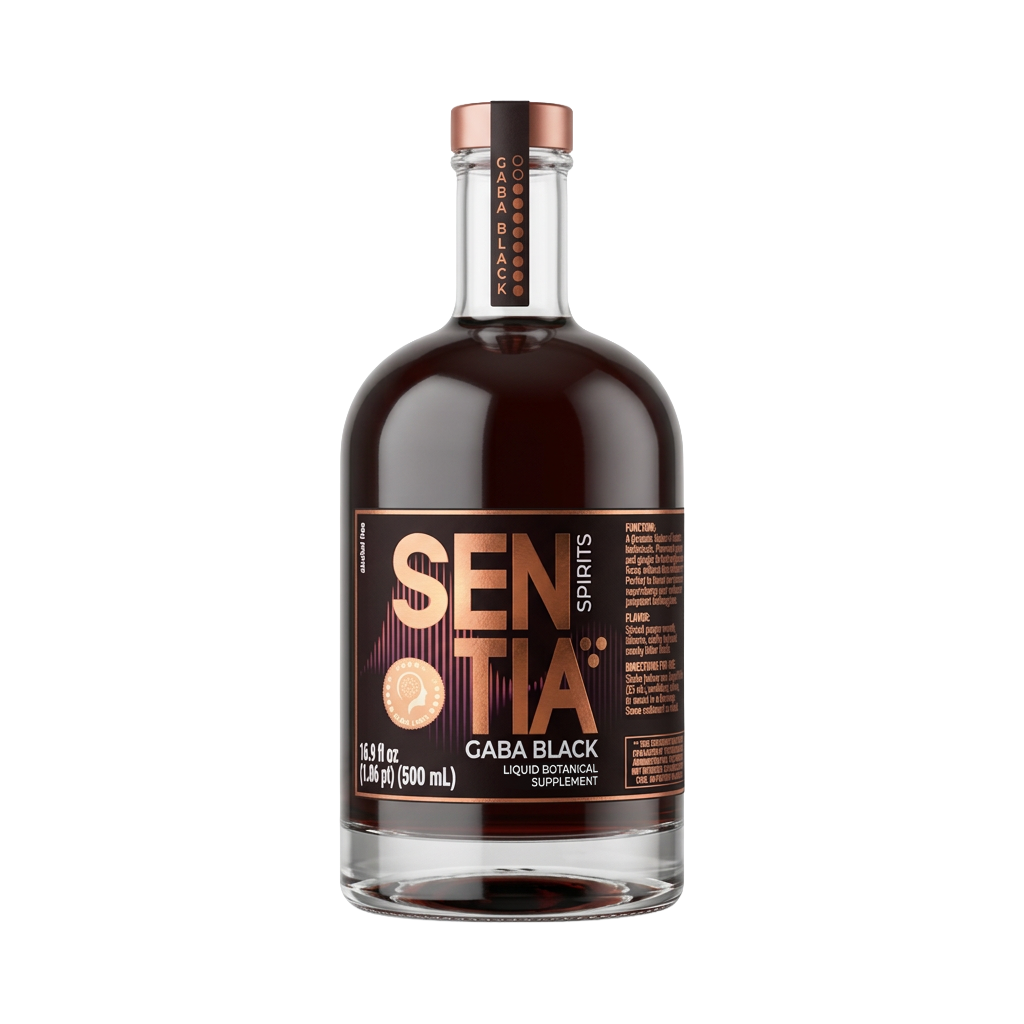
GABA Labs is working with research teams at several UK universities to explore the effects of SENTIA products, GABA-related biology, functional alcohol alternatives, botanical ingredients and the brain-gut axis.
The work ranges from exploratory EEG (brain wave scanning) research using SENTIA at the University of Exeter to brain-gut-microbiome research at the University of Portsmouth and analysing the chemistry of SENTIA’s ingredients at King’s College London. Portsmouth researchers are also carrying out early laboratory work using SENTIA Red and gut tissue. Some projects have findings that can be discussed in broad terms; others are still under way. None should be read as proof of SENTIA’s effects just yet.
What is this page about?
This page brings together ongoing and emerging university research involving GABA Labs, SENTIA products and their botanical ingredients.
Are these all peer-reviewed studies?
No. Some findings have been shared at conferences, while other projects are still in progress. Until research completes peer review, the results should be treated as preliminary.
Are SENTIA products being used in these studies?
Yes. Some projects use SENTIA products directly, while others study SENTIA botanical ingredients or are expected to use them as the research develops.
Does this prove SENTIA works?
No. The studies help researchers build a clearer picture of SENTIA, GABA-related mechanisms and functional alcohol alternatives. On their own, they do not establish finished-product effectiveness or guarantee a particular experience from SENTIA products.
Why ongoing research matters
SENTIA grew out of a scientific question: can we explore the relaxed, sociable part of drinking without relying on alcohol?
The peer-reviewed papers in this research hub set out the wider science. These university collaborations take the next step on this journey by asking more specific questions about SENTIA products, botanical ingredients and how GABA works throughout the body. Review papers bring existing evidence together, while ongoing studies test ideas in the lab and with research participants. This page is a snapshot of this developing work.
University of Exeter: EEG research into SENTIA and alcohol
At the University of Exeter, researchers are looking for measurable patterns in brain activity after people drink SENTIA, then comparing those patterns with alcohol.
In this exploratory EEG (or brainwave) study, participants receive either SENTIA or a visually matched alcoholic drink. Researchers record brain activity before and after the drink, then use questionnaires to capture how participants report feeling.
The team is looking for a measurable “fingerprint” in brain activity and asking how it compares with alcohol. EEG stands for electroencephalography. It records electrical activity in the brain, allowing researchers to look at patterns such as alpha, beta and gamma waves. Alpha brainwaves are linked with relaxed wakefulness, beta with active thinking and alertness, and gamma with higher-level information processing.
Early findings suggest that SENTIA and alcohol are both associated with changes in brain activity. Researchers have also observed differences in some brain-wave types and regions. The link between reported feelings and brain activity appears to differ between the two conditions as well.
That gives researchers something more than self-reported experience to work with: they can compare what participants say with what the EEG records. The study is exploratory, so these early findings should not be treated as final or peer-reviewed clinical evidence.
Why this matters for SENTIA
Because SENTIA was developed around the GABA system and the social ritual of drinking, brain activity is an important area to investigate. EEG gives researchers one way to ask whether SENTIA produces measurable changes and how those changes compare with alcohol.
University of Portsmouth: brain-gut-microbiota research
At the University of Portsmouth, researchers are investigating how alcohol and botanical compounds behave across the brain-gut-microbiota axis. You can think of the brain-gut-microbiota axis as the information network connecting the brain, gut, and microbiome. Signalling in the brain, in the gut, and from microbes in the stomach and intestines all influence one another.
The project, Comparative effects of alcohol and GABA mimetics on the brain-gut-microbiota function, is a four-year PhD programme jointly funded by the South Coast Biosciences Doctoral Training Partnership and GABA Labs.
This work looks at the biological conversation between the brain, digestive system and gut microbes, and at the role GABA may play within it. Researchers are also comparing botanical compounds with alcohol. The gut matters here because it does far more than digest food. It communicates with the brain through several routes, including nerves, immune signalling and chemical messengers produced by microbes.
Professor Jerome Swinney (senior scientific consultant at GABA Labs), Dr Murphy Wan at the University of Portsmouth and Dr Delia Belelli supervise the project. To answer these questions, the research combines several methods:
- looking at how genes switch on or off (gene expression),
- mapping where proteins are found,
- measuring electrical activity in cells (electrophysiology),
- testing how gut tissue responds under different conditions (functional gut tests).
Why this matters for SENTIA
Most of SENTIA’s science story starts with alcohol, GABA and the brain. The Portsmouth project broadens that view by asking how GABA-related biology may also operate in the gut and microbiome. The project is about mechanism, rather than a gut-health claim for SENTIA. It may help researchers understand how GABA-related botanicals interact with biological systems beyond the brain.
University of Portsmouth: SENTIA and gut-tissue physiology
A Portsmouth research presentation describes early laboratory findings on GABA Red, gut tissue and activity linked to GABA-A receptors.
The presentation, titled A novel botanical beverage that mediates gastrointestinal relaxation and mimics the effects of low dose alcohol, by engaging GABA-A receptors of the enteric nervous system, describes early laboratory work using gut-tissue models.
Researchers tested GABA-A receptors in different parts of the gut and compared how GABA Red, alcohol and other compounds affected natural intestinal movement. They examined how gut tissue contracts and relaxes, and whether GABA-A receptors help explain the response to SENTIA GABA Red.
In this laboratory model, the researchers reported relaxation-like effects in gut tissue after consuming SENTIA. Some of those effects appeared to involve GABA-A receptors. Low levels of alcohol produced similar effects in the model.
King’s College London: analytical chemistry of SENTIA botanicals
At King’s College London, the focus moves from whole products to the chemistry inside SENTIA’s botanical ingredients. The Department of Chemistry at King’s College London has announced a collaboration with GABA Labs and SENTIA Spirits. Research Masters student Ziv Sheldon is carrying out the project under the supervision of Dr Helen Coulshed.
The team is studying naturally derived ingredients used in SENTIA, including magnolia bark, passionflower and damiana. The aim is to identify compounds that may be relevant to GABA receptor activity and to the social ease people often seek from alcohol. This work is analytical chemistry rather than a tasting study or finished-product trial. Researchers separate and identify compounds within complex plant ingredients so they can understand them more precisely.
Why this matters for SENTIA
SENTIA’s botanical blends are purpose-built. The ingredients are selected for particular roles within the blend. Analytical chemistry can show GABA Labs which compounds within those botanicals deserve closer attention. Over time, that knowledge can support more new, more effective blends and a clearer scientific understanding of how SENTIA products are developed.
What these studies are helping us understand
Taken together, the collaborations are asking four practical research questions:
1. Brain activity
Does SENTIA produce measurable changes in brain activity patterns, and how do those patterns compare with alcohol?
2. GABA mechanisms
Which GABA-related pathways might help explain the effects of SENTIA products and their botanical ingredients?
3. The gut and microbiome
How do GABA-related compounds interact with the communication system between the gut, its microbes and the brain?
4. Botanical chemistry
Which compounds in SENTIA’s botanicals may be most relevant to product function and future development?
These are questions researchers are still working on. They are not finished-product claims.
What these studies do not prove
The studies do not show that SENTIA treats anxiety or digestive symptoms, improves gut health, repairs alcohol-related harm or prevents disease. They also cannot tell us that everyone will have the same experience.
Each project sits at a different stage. The Exeter EEG study is exploratory and has not yet been peer reviewed. The Portsmouth presentation reports early laboratory work, while the PhD project is ongoing. The King’s College London chemistry work focuses on ingredients and compounds rather than consumer outcomes.
Taken together, these projects form part of a growing research programme around SENTIA, GABA-related mechanisms and functional alternatives to alcohol. Their value is in building the scientific picture step by step.
Learn More:
Read our peer-reviewed research paper Functional Alternatives to Alcohol
Read the publication page for Reducing the Harms of Alcohol: Nutritional Interventions and Functional Alcohol Alternatives:
[Nutritional Interventions Page URL: https://www.sciencedirect.com/science/chapter/bookseries/abs/pii/S0074774224000266?via%3Dihub]
External university research pages
University of Exeter CPNS Lab:
University of Portsmouth brain-gut-microbiota PhD project
King’s College London chemistry collaboration