Few drugs have become famous as quickly as the GLP-1 agonists. Ozempic, Wegovy and related medicines are now so strongly associated with weight loss that it is easy to forget they began as diabetes treatments. Their commercial success has been extraordinary, and understandably most public attention has focused on what happens to body weight.
But scientifically, something more interesting may be happening.
People taking these drugs often describe not simply eating less but thinking about food less. The persistent internal conversation about what to eat, when to eat and what might taste good becomes quieter. The popular term for this is “food noise”.
Researchers are now asking whether GLP-1 drugs may be affecting something broader than appetite: craving itself. And alcohol is becoming an important test of that idea.
A new randomised clinical trial published in The American Journal of Psychiatry studied oral semaglutide in 50 people seeking treatment for moderate-to-severe alcohol use disorder. Over eight weeks, those receiving semaglutide had fewer heavy-drinking days, drank less on the occasions when they did drink, and reported lower day-to-day alcohol cravings than those receiving placebo [1]. This is still a small and relatively short study, and GLP-1 drugs are not approved treatments for alcohol addiction. But it adds to a pattern.
An earlier clinical trial found that low-dose weekly semaglutide reduced alcohol craving and some measures of alcohol consumption [2]. More recently, a larger trial published in The Lancet found that semaglutide, alongside cognitive behavioural therapy, produced a greater reduction in heavy-drinking days than placebo and therapy in people with alcohol use disorder and obesity [3].
So why would a drug associated with appetite affect alcohol? To understand that, we need to think differently about craving. Craving is not simply the body demanding a particular chemical. It is often a prediction about how something will make us feel.
Consider the thought of a cold beer after work.
The attraction is rarely its ethanol content in isolation. The brain has connected that drink with a whole collection of things: the end of work, a familiar taste, relaxation, a particular place, certain friends, relief from tension, perhaps the first few minutes in which conversation becomes easier.
Memory, environment and expected reward become bundled together. This is why cravings can appear remarkably quickly when we enter a familiar setting. A person who has not thought about drinking all afternoon can walk into a bar and suddenly want a beer.
One brain region attracting attention in this research is the lateral septum. It sits at an interesting junction between systems involved in memory, context, motivation and reward. Recent neuroscience suggests GLP-1 signalling there may influence the motivational value attached to alcohol [4]. This starts to make the GLP-1 story much bigger than appetite suppression.
These drugs may be helping scientists investigate how the brain converts “I know what that will feel like” into “I want it now.” That question matters far beyond food.
A large observational study involving more than 600,000 US veterans with type 2 diabetes found that people taking GLP-1 drugs had lower rates of several substance-use-related outcomes than comparable patients taking another class of diabetes medicine [5]. Because this was an observational study, it cannot prove that the drugs themselves caused those differences. But it strengthens the case for proper clinical research.
There is even a possibility that the tremendous success of GLP-1 drugs for weight loss has narrowed the way we think about them. Once a medicine becomes worth billions for one purpose, that purpose tends to dominate the conversation. Yet GLP-1 biology was interesting long before Ozempic became a cultural phenomenon. What these drugs may now be revealing about appetite, reward, memory and motivation could prove at least as scientifically important as what they do to waistlines.
There is also another distinction worth making when we talk about alcohol. Clinical research into alcohol use disorder is concerned with people whose drinking is causing serious harm and with whether medicines might reduce compulsive consumption and craving. That is an important medical problem requiring proper clinical treatment.
But most people who sometimes think, “I could really do with a drink”, are not necessarily experiencing addiction.
Often what they want is the effect associated with the drink. They want to relax. They want the working day to feel finished. They want conversation to flow. They want to feel less self-conscious, less inhibited and more themselves around other people.
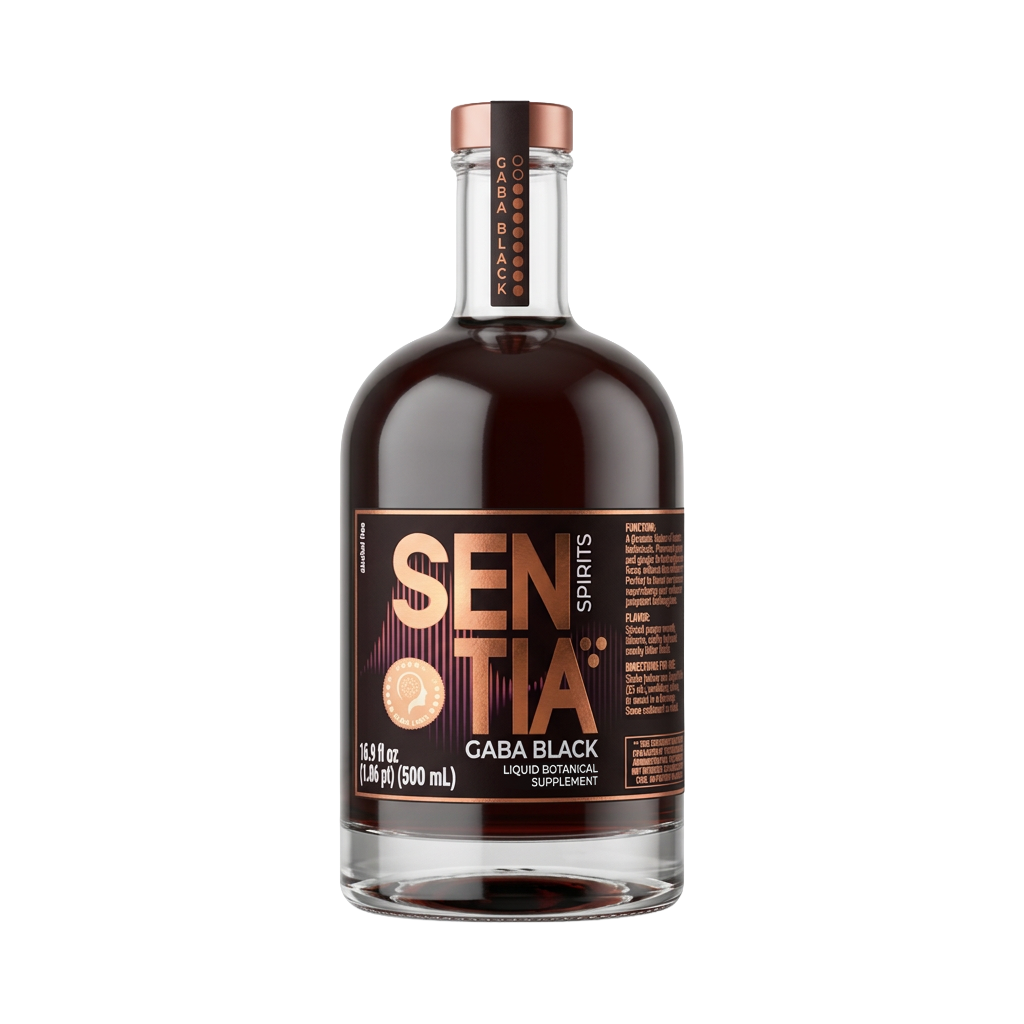
Alcohol is unusually effective at producing some of those changes because it acts on several brain systems, including GABA, the brain’s major inhibitory signalling system. But ethanol brings many other effects along with the ones we wanted. This is a very different problem from treating addiction, and it requires a different sort of thinking. The question behind functional social drinks is not how to suppress an alcohol craving medically. SENTIA is not an addiction treatment.
The question is whether, on ordinary social occasions, alcohol should remain our default method for producing relaxation and social ease. If what somebody wants is the taste of whisky, there are increasingly good alcohol-free whiskies. But if what they really wanted from the whisky was to feel a little less tense at a party, removing the ethanol solves only half the problem.
This is why the science of craving is so fascinating. It forces us to ask what the object of our desire actually is. Sometimes we want the thing itself. Very often, we want the state we have learned to associate with it.
GLP-1 drugs are beginning to give scientists a new way of teasing those two things apart. Their greatest scientific legacy may therefore turn out to be much broader than helping people eat less. They may help us understand why we want things in the first place.
—Professor David Nutt
References
[1] Schacht, J. P., Sakai, J. T., Raymond, K. M., & Shelton, R. C. “Oral Semaglutide for Alcohol Use Disorder: A Randomized Clinical Trial.” The American Journal of Psychiatry, 2026. DOI: 10.1176/appi.ajp.20260003.
[2] Hendershot, C. S., Bremmer, M. P., Paladino, M. B., et al. “Once-Weekly Semaglutide in Adults With Alcohol Use Disorder: A Randomized Clinical Trial.” JAMA Psychiatry, 82(4), 395–405, 2025.
[3] Klausen, M. K., Justesen, S. K., Pedersen, J. N., et al. “Once-Weekly Semaglutide Versus Placebo in Patients With Alcohol Use Disorder and Comorbid Obesity: A Randomised, Double-Blind, Placebo-Controlled Trial.” The Lancet, 407(10540), 1687–1698, 2026.
[4] Tian, Y., Liu, Y., Jing, H., et al. “A Septal Inhibitory Circuit Constrains Alcohol Reward and Mediates Liraglutide’s Suppressive Effects on Alcohol Intake.” Neuron, 114(13), 2423–2440.e6, 2026.
[5] Cai, M., Choi, T., Xie, Y., & Al-Aly, Z. “Glucagon-Like Peptide-1 Receptor Agonists and Risk of Substance Use Disorders Among US Veterans With Type 2 Diabetes: Cohort Study.” BMJ, 392:e086886, 2026.