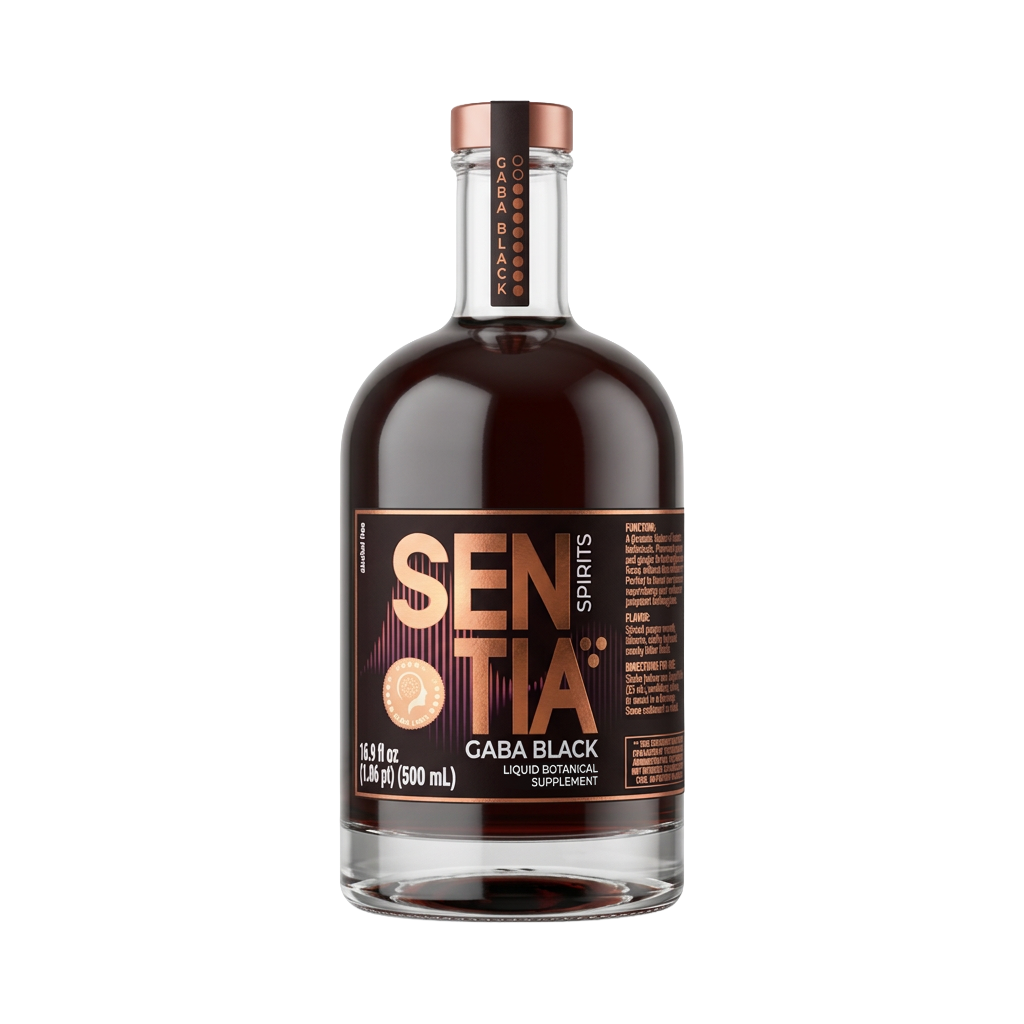
SENTIA’s scientific rationale is informed by peer-reviewed research authored by members of the GABA Labs Science Team, including Professor David Nutt. The work explores why alcohol feels socially useful to many people, how GABA and GABA-A receptors are involved, and how functional alternatives might offer a different approach to social drinking without alcohol.
These papers are part of the scientific backdrop to SENTIA. They are not clinical trials of a finished SENTIA product, and they do not show that SENTIA itself has been clinically proven. What they do is help explain why SENTIA is designed around the brain’s GABA system, botanical function and the social experience people often look for in a drink.
The relationship between SENTIA, GABA Labs and Professor David Nutt
SENTIA is the consumer-facing botanical functional-spirit brand. GABA Labs is the research organisation whose work helps inform SENTIA’s scientific rationale.
Professor David Nutt is Founder and Chief Scientific Officer of GABA Labs, as well as Founder of SENTIA. A neuropsychopharmacologist, he has spent decades studying how alcohol affects the brain, why it can feel socially useful, and whether some of its early, desirable effects can be separated from the wider effects that come with drinking alcohol.
That work led to a straightforward question: could you design a drink around the relaxed, sociable experience people often seek from alcohol, without putting alcohol in the glass? The research below helps explain how that question developed.
What peer-reviewed research is connected with SENTIA?
Two peer-reviewed scholarly publications are especially relevant to the scientific thinking behind SENTIA:
1. Functional Alternatives to Alcohol Professor David Nutt, Robin J. Tyacke, Dr Meg J. Spriggs, Professor Alan D. Borthwick and Dr Delia Belelli Published in Nutrients, 2022
2. Reducing the Harms of Alcohol: Nutritional Interventions and Functional Alcohol Alternatives Dr Delia Belelli, Dr Antonio Riva and Professor David Nutt Published in International Review of Neurobiology, 2024
Both are scholarly reviews. In other words, they examine and bring together existing research rather than reporting a clinical trial of SENTIA. They help set out the scientific case for studying functional alternatives to alcohol and the mechanisms that may matter most.
Functional Alternatives to Alcohol
Functional Alternatives to Alcohol is a peer-reviewed review published in Nutrients in 2022. It looks at how alcohol produces the effects people may enjoy as well as the effects that cause harm, with particular attention to GABA, GABA-A receptors and social behaviour.
Alcohol does not act through one tidy pathway. It interacts with several neurotransmitter systems in the brain and body. At lower doses, some of its relaxing and pro-social effects are linked in part to enhanced signalling at GABA-A receptors. As alcohol levels rise, its effects become much less selective, involving systems such as glutamate, dopamine and endorphins too.
That is the starting point for the idea of a functional alternative.
If relaxed sociability is one of the things people value about drinking, the scientific challenge is to understand the mechanisms behind that feeling and ask whether they can be approached more selectively. The goal is not to copy alcohol in full or recreate intoxication. It is to explore whether a functional drink can support the social experience people are looking for without ethanol.
The paper looks at both botanical and synthetic approaches, including molecules found in nature. It also gets into the less glamorous but essential questions of formulation, safety, regulation and how an idea moves from the lab into a drink someone might order at a bar.
Read more
Peer Reviewed Research: Functional Alternatives to Alcohol
Reducing the Harms of Alcohol: Nutritional Interventions and Functional Alcohol Alternatives
Reducing the Harms of Alcohol: Nutritional Interventions and Functional Alcohol Alternatives is a peer-reviewed scholarly review published in International Review of Neurobiology in 2024.
This paper takes a broader view of alcohol-harm reduction. Alongside the neuroscience of alcohol, it considers nutritional interventions, deficiencies linked with heavy drinking, gut and liver health, the microbiota and the role functional alternatives could play.
It also deals with a practical reality: alcohol has a social role. For many people, drinking is tied to dinner, celebrations, meeting friends or simply marking the end of the day. Telling people to drink less may be sensible advice, but it does not automatically replace what the occasion was doing for them. Depending on the person, abstinence, moderation, substitution and nutritional support can all sit within a wider harm-reduction conversation.
This is where functional alternatives become interesting. A conventional alcohol-free drink can preserve the taste, glassware and ritual of having a drink. Functional alternatives ask whether a drink can go further and be designed with the social purpose in mind too, including the desire to feel more relaxed and at ease with other people.
Read more
Reducing the Harms of Alcohol: Nutritional interventions and Functional Alternatives to Alcohol
Why GABA appears in SENTIA’s science story
GABA matters here because it is the brain’s main inhibitory neurotransmitter. One of its jobs is to help regulate neural excitability, keeping activity in the nervous system from becoming too switched on. That makes the GABA system relevant to relaxation and to some of the early effects people notice when they drink alcohol.
Alcohol’s early relaxing effects are partly linked to GABA-A receptor signalling. That helps explain why a small amount of alcohol can make someone feel less guarded or more socially at ease. The problem is that alcohol does not stay focused on one system. As the dose rises, its pharmacology becomes broader, affecting other brain systems and contributing to changes in coordination, memory, sleep, mood and how you feel the next day.
SENTIA’s scientific rationale begins with that difference. The idea is to understand the part of the drinking experience people often want, particularly relaxed sociability, and explore more targeted alcohol-free ways of supporting that kind of occasion.
How can functional alternatives relate to alcohol-harm reduction?
Functional alternatives may have a role in alcohol-harm reduction because they give people another option when the thing they want to change is the drink, rather than the social occasion around it.
Alcohol-free drinks already do an important job. They give you something enjoyable to pour, hold and sip, so you can stay part of the ritual. But flavour and ritual are only part of why many people drink.
SENTIA’s view is that alcohol-free drinking becomes more useful when it also takes that motivation seriously. People may be looking to unwind after work, feel more comfortable in conversation or simply settle into an evening with friends. A functional approach starts by asking what role the drink is meant to play in that moment.
Functional alternatives are one option within the much wider field of alcohol-harm reduction. They are not a treatment for alcohol dependence or a medical intervention. For adults who want to swap some or all alcoholic occasions for something without ethanol, they offer a drink designed with the social function of drinking in mind.
What these publications establish
Together, these publications provide scientific context for SENTIA’s research-led approach. They describe how alcohol acts across several brain and body systems, including the GABA system and GABA-A receptors. They also explain why GABA is relevant when scientists study relaxation, sociability and some of alcohol’s early effects, and why more selective functional alternatives are a worthwhile area of research.
The papers also place functional alternatives inside the broader discussion about reducing alcohol-related harm. That discussion can include drinking less, choosing not to drink, swapping alcoholic drinks for alternatives and addressing some of the nutritional consequences associated with alcohol use.
Just as importantly, they show why developing a credible functional alternative is complicated. Choosing botanicals is only one part of the job. Researchers also have to think about mechanism, chemistry, how ingredients are absorbed, safety, formulation and whether the finished drink makes sense in an ordinary social setting.
What these publications do not establish
What these papers do not do is provide finished-product clinical evidence for SENTIA. They are scholarly reviews, not clinical trials of a commercial SENTIA product. They do not show that SENTIA treats anxiety, prevents disease, treats alcohol dependence or removes the risks associated with alcohol use. They also cannot tell us that every person will experience a finished SENTIA drink in the same way.
The useful way to read them is as scientific foundation and research context. They help explain why GABA, sociability and functional alternatives are central to SENTIA’s thinking. That is different from evidence gathered by testing the finished product itself, and the two should not be confused.
Keeping that line clear makes the science more useful, not less interesting. You can find more information on ongoing studies using SENTIA here.
Why peer review matters
Peer review means a scholarly article has been assessed by independent experts before publication. It does not make every conclusion final, but it does add an important layer of scrutiny to how the evidence and argument have been put together.
That is particularly useful in fast-moving areas where scientific language can travel faster than the science itself. Terms such as GABA, neurotransmitters, adaptogens and receptors can make a claim sound impressive. The terminology only means something when the evidence behind it is clear.
Peer-reviewed work makes it easier to ask the questions that matter. What is well established? What is still a hypothesis? Does the evidence come from people, animals, laboratory experiments or traditional use? And where are the gaps?
That is the kind of science SENTIA wants readers to be able to explore: interesting, useful and explained in plain English.
How this research informs SENTIA’s scientific rationale
SENTIA’s scientific rationale starts with a simple observation: for many people, the appeal of alcohol is about what the drink does as well as how it tastes.
A drink can mark the shift from work to evening, make a social ritual feel shared and, in the case of alcohol, change how people feel. Research involving members of the GABA Labs Science Team looks at the neuroscience behind those effects, particularly the GABA system, and at how functional alternatives might be designed around similar social goals without alcohol.
SENTIA uses purpose-built botanical blends, with ingredients selected for flavour and function and designed around the brain’s GABA system. The formulation rationale is informed by research into individual ingredients and mechanisms, but that ingredient evidence should not be mistaken for evidence from trials of the finished SENTIA product. The drink still has to taste good and work naturally in a social setting; function is simply part of the brief from the start.
That is the distinction SENTIA is trying to make within alcohol-free drinking. The starting point is a scientific question about sociability and function, then the product is built to belong in the same real-world moments where people would normally reach for a drink.