Reducing the Harms of Alcohol: Nutritional Interventions and Functional Alcohol Alternatives is a peer-reviewed scholarly review published in International Review of Neurobiology in 2024.
The review looks at two broad ways researchers might reduce alcohol-related harm: nutritional interventions and functional alcohol alternatives. We include it on the SENTIA website because it puts functional alternatives into the bigger scientific picture. That matters to SENTIA, which was created for social occasions where alcohol might otherwise be the default.
This publication is not a clinical trial of the finished SENTIA product.
What does this publication say?
The publication explores two lines of research: whether nutrition can help address some effects linked to alcohol, and whether functional alternatives can give people another option in social settings. This is research context rather than a trial of SENTIA. The paper does not test the finished drink or claim a clinical outcome for it. Its relevance is broader: it asks what alcohol-harm reduction could look like in real life, where drinking is often tied to habit, ritual and socializing.
What question does this publication address?
The paper starts with a practical problem: how do you reduce alcohol-related harm when drinking is still woven into social culture? People rarely choose a drink for taste alone. A drink can mark the end of the working day, ease people into conversation or simply help them feel part of the occasion. Taking alcohol out of the glass removes ethanol, but it does not automatically replace that social role.
The review considers two possible routes. One looks at nutrition and whether it can help address some biological effects linked to alcohol. The other looks at functional alcohol alternatives that could replace alcohol in some social occasions.
What are nutritional interventions for alcohol-related harm?
Here, nutritional interventions means using diet, nutrients, probiotics, prebiotics or related approaches to support areas of health that alcohol can affect. Alcohol’s effects reach well beyond the brain. The review looks at the gut, liver, immune system, vitamin status and metabolism, then asks where nutrition might have a useful role in harm-reduction research. Nutrients cannot “cancel out” alcohol or make drinking risk-free. The question is more specific. If alcohol contributes to nutritional deficiencies, gut disruption or other biological stress, could nutrition help address some of those effects?
What are functional alcohol alternatives?
Functional alcohol alternatives aim to offer more than a convincing taste or a familiar drinking ritual. A good alcohol-free drink can already do a lot. It can look right in the glass and let someone join the round without alcohol. Functional alternatives take the idea further by asking whether a drink can also be designed around why people often reach for alcohol in social settings.
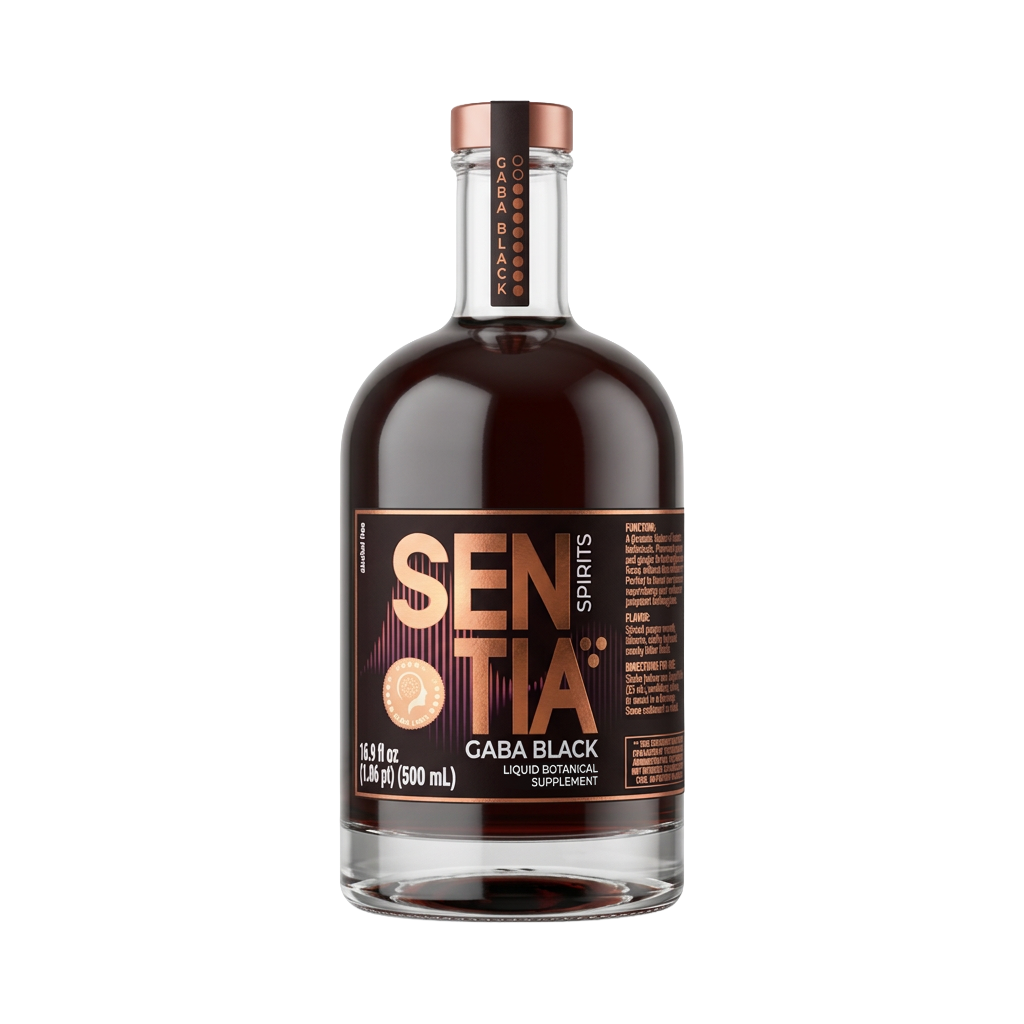
The question is whether an alcohol-free drink can be designed with social function in mind, including the relaxed ease people often look for when they drink, without using ethanol. That is where SENTIA fits into the conversation. SENTIA is a botanical functional spirit designed around the neuroscience of sociability and the brain’s GABA system.
How can substitution fit alongside abstinence and moderation?
Substitution is one option within alcohol-harm reduction. What makes sense depends on the person, their goals and their relationship with alcohol. Some people choose abstinence, while others choose moderation. If someone is dependent on alcohol, support from a doctor, clinician or alcohol treatment service may be important. Suddenly stopping can be dangerous for someone who is physically dependent.
Functional substitution can sit alongside those approaches. For some people, it may offer a way to swap out particular drinking occasions while keeping the familiar ritual of a grown-up drink.
SENTIA belongs in that space. It is a functional alcohol alternative for people who want to reduce or replace some alcohol-centered moments without losing the ritual of a drink. It is not a treatment for alcohol dependence or a substitute for medical care.
Why is this publication relevant to SENTIA?
This publication matters to SENTIA because it places functional alternatives within the wider scientific conversation about reducing alcohol-related harm. The idea behind SENTIA starts with the social moment itself. Think of the first drink after work, a catch-up with friends or the point in the evening when everyone settles into conversation. SENTIA was created with those occasions in mind.
The publication also helps explain why GABA appears in SENTIA’s science story. GABA is the brain’s main inhibitory neurotransmitter and helps regulate neural excitability. Alcohol’s early relaxing effects partly involve the GABA system, although alcohol soon acts much more broadly across the brain. SENTIA’s botanical blends were designed around research into GABA-related signalling, without ethanol.
The distinction matters. This review helps explain the scientific rationale for functional alternatives. It is not finished-product evidence for SENTIA.
What does this publication not prove?
Reading this publication should not be confused with reading a clinical trial of SENTIA. The authors do not test the finished SENTIA product. The review does not show that SENTIA treats anxiety, prevents disease, cures alcohol dependence, repairs alcohol-related harm or guarantees how someone will feel.
The review also leaves room for different approaches to alcohol-harm reduction. Drinking patterns, health, goals and risk vary widely from person to person. Functional substitution may suit some people and some occasions, but it is one option within a much bigger picture.
Key themes from the publication
1. Alcohol-related harm needs more than one answer Alcohol affects many parts of health and social life. The review therefore looks beyond a single answer and considers different ways to reduce harm.
2. Nutrition is relevant to alcohol-related harm Alcohol can affect vitamin status, gut health, liver function, inflammation and the microbiota. The review looks at where nutrition might help address some of these effects.
3. Functional alternatives address the social role of alcohol Alcohol can be difficult to swap out because drinking has a social function as well as a familiar flavor and ritual. Functional alternatives try to address that social function too.
4. Substitution can sit alongside moderation and abstinence The review treats substitution as one option alongside moderation and abstinence. Different approaches may suit different people, depending on their goals and level of risk.
5. GABA remains scientifically relevant GABA-related mechanisms matter because GABA is central to inhibitory signalling in the brain, and alcohol’s early relaxing effects partly involve GABA-A receptors.
6. SENTIA is part of the functional-alternative category SENTIA appears in the review as an example from the developing functional-alternative category. On this site, we use that mention as scientific context for the category and SENTIA’s rationale, rather than as clinical evidence for the finished drink.
In plain English…
Why has alcohol been so hard to replace? Partly because people use it for more than taste. A drink can signal that the working day is done, make a social ritual feel familiar or help someone settle into an evening. Alcohol also causes harm. That makes a practical question worth asking: what might help people drink less when they still want the social experience built around a drink? This review explores two parts of that puzzle. One looks at nutrition and how it might support areas of the body affected by alcohol. The other asks whether functional alternatives can take alcohol’s place in some social moments.
SENTIA sits in that second area of research. It is a botanical functional spirit designed for social occasions, without alcohol.
Read the publication
You can read the full paper here